Streamlining Volunteer Management: The Role of a Structured Volunteer Log Book
Coordinating volunteers is a rewarding yet often logistically challenging endeavor. Whether you're running a community clean-up day, managing a church event, or overseeing helpers at a local festival, the details matter—who signed up, what tasks they completed, how many hours they contributed. This is where a dedicated Volunteer Log Book becomes indispensable. Specifically, pre-designed KDP interiors for a Volunteer Log Book offer creators a ready-to-use framework to produce a physical tool that brings order to these activities.
What is a Volunteer Log Book KDP Interior?
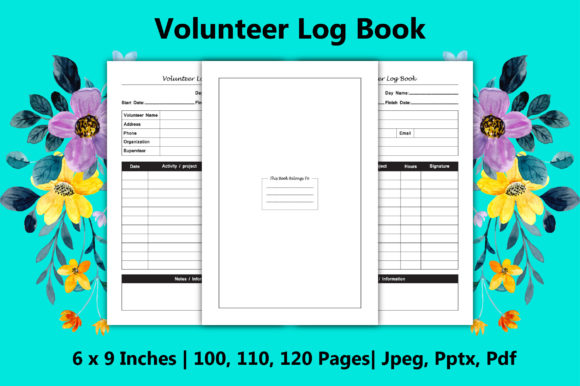
In the world of self-publishing, especially on platforms like Amazon's Kindle Direct Publishing (KDP), an "interior" refers to the pre-formatted, printable pages of a book. A Volunteer Log Book - KDP Interiors is a downloadable digital file package containing the complete inside layout of a log book, tailored for tracking volunteer information. It's not the finished physical book itself, but the blueprint creators use to publish it. These packages typically include the designed pages in formats like PDF and JPEG, ready for upload to KDP, where you can then offer the printed log book to your customers.
For entrepreneurs focusing on the low or no-content book market on Amazon, this is a practical product. The interior comes with standard dimensions of 6 x 9 inches, page counts of 100, 110, or 120 pages, and settings compatible with KDP's printing requirements, like a no-bleed layout and black and white interior. The key value is efficiency; instead of designing each page from scratch, you acquire a tested template that fulfills a specific, recurring need in communities and organizations.
The Real-World Need for Volunteer Tracking
Consider a scenario: a school parent-teacher association organizes a major fundraiser. They have 50 volunteers over a three-day event. Without a central system, sign-in sheets get misplaced, hours are estimated incorrectly, and recognizing standout contributors becomes guesswork. A physical Volunteer Log Book, placed at a central check-in table, provides a consistent record. Each volunteer enters their name, contact details, shift times, and assigned duties. At the end of the event, the PTA leader has a bound, permanent record—not a loose stack of papers—that simplifies reporting, acknowledges service accurately, and provides data for planning next year's event.
This need extends far beyond schools. Non-profit directors, community group coordinators, and event managers all face the same core challenge: transforming goodwill and volunteered time into measurable, manageable data. A specialized log book turns informal participation into structured documentation.
Diverse Applications Across Different Groups
The utility of a Volunteer Log Book isn't confined to one type of user. Its design serves multiple roles in various settings.
- Small Non-Profit Organizations: For a local animal shelter or food bank operating with minimal admin staff, a log book is an affordable, low-tech solution. It sits at the entrance, requiring no software training. It tracks recurring volunteers' cumulative hours, which is crucial for grant applications that require proof of community engagement.
- Faith-Based and Community Groups: Churches managing volunteer teams for outreach programs, soup kitchens, or youth camps use these logs to ensure accountability and schedule fairness. It helps coordinate large numbers of people donating their time intermittently.
- Event Planners and Festival Organizers: For one-off large events, a log book acts as the master roster. It helps with on-the-spot task assignment and is a vital reference for post-event thank-you letters and impact assessments.
- Educational Coordinators and Coaches: Teachers overseeing student volunteer projects for credit, or coaches managing parent volunteers for a sports team, find a standardized log simplifies compliance and record-keeping, ensuring requirements are met transparently.
Each of these users benefits from the same core outcome: reduced administrative chaos and enhanced legitimacy of their volunteer programs.
Choosing a Pre-Made Interior: Practical Considerations
If you're a KDP publisher or a small business owner looking to offer such a product, using a downloadable Volunteer Log Book - KDP Interiors package can jumpstart your process. However, your choice should align with real user needs. Here are factors to consider from the end-user's perspective, which should inform your publishing decision.
First, the page count (100, 110, 120) matters based on the scale of volunteer activity. A small community group with a dozen regular volunteers might need a 100-page book that lasts years. A large university program with hundreds of students volunteering annually might require a 120-page book or even multiple volumes. The interior you choose to publish should match the logical duration of the record.
Secondly, the layout and structure of the interior pages are critical. A good interior design will include clear sections for date, volunteer name, contact information, hours served, tasks performed, and supervisor signatures. Think about the volunteer coordinator who will be using it—they need fields that are intuitive and comprehensive enough to capture necessary data without being overly complex. The included PPTX or PDF files for customization allow you, as the publisher, to potentially tweak these elements to better suit a niche audience, like adding a field for "skill set" for a technical volunteer group.
Finally, the format compatibility is essential for your technical success on KDP. The fact that these interiors are tested with Amazon KDP and include no-bleed settings means you avoid the common pitfalls of first-time publishers—upload errors and print mismatches. This reliability translates directly to a smoother business operation for you, letting you focus on marketing the book rather than fixing design issues.
The Outcome: From Template to Tangible Tool
When you publish a Volunteer Log Book using a quality KDP interior, you are ultimately providing a physical tool that solves a persistent problem. The end-user—the volunteer coordinator—gains a professional, bound notebook that signals the importance of the volunteer's contribution. It moves beyond a simple notepad; it is a dedicated instrument for stewardship. This tangible nature encourages consistent use. People are more likely to maintain a record in a designated book than on scattered sticky notes or digital files that may not be accessible to all on-site staff.
For the KDP entrepreneur, this represents a clear market opportunity. You are identifying a procedural gap in many small organizations and offering a straightforward, affordable product to fill it. The value isn't in the book's content being "low"; it's in its function being highly focused and effective. By selecting an interior package with multiple file formats for customization, you also retain the flexibility to adapt and create variations, perhaps for different types of volunteering like "Environmental Cleanup Log" or "Mentoring Program Log," broadening your product line.
Beyond the Log: Building a System of Recognition
A Volunteer Log Book’s greatest impact often comes after the hours are recorded. The collected data becomes the foundation for recognition and improvement. Coordinators can use the log at the end of a quarter or year to identify top contributors, calculate total community hours donated, and produce reports for boards or sponsors. This transforms volunteered time from an abstract concept into concrete metrics that can drive further support and engagement.
For the volunteer, seeing their name and hours formally recorded in a book can be a small but significant token of appreciation. It validates their effort. In a practical sense, it also serves as a personal record for students needing proof of service hours or professionals building their community involvement portfolio.
In essence, a Volunteer Log Book published via a ready-made KDP interior is more than just a product listing. It’s a facilitator of better management and greater appreciation in the vast world of volunteerism. For the publisher, it’s a tangible solution to offer. For the coordinator, it’s a tool to bring order and gratitude to the generous, often unpaid work that keeps communities thriving.