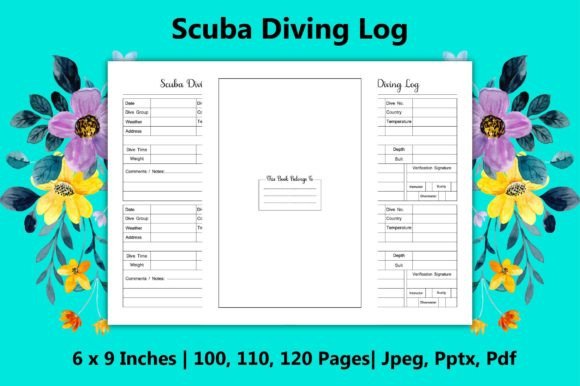
The Scuba Diving Log KDP Interior: Your Key to a Profitable Dive Business
For entrepreneurs looking at the Amazon Kindle Direct Publishing (KDP) marketplace, the promise of low-content books is a compelling one. Create a useful template, upload it, and generate passive income. It sounds straightforward, but the reality of delivering a product that truly serves customers—and succeeds in the marketplace—requires careful attention. A product like the Scuba Diving Log - Kdp Interiors download represents a fantastic opportunity, but only if approached with the right knowledge and preparation.
This isn't just a generic notebook template; it's a specialized tool designed for a passionate community. Scuba divers, from beginners to seasoned professionals, rely on logs to record dive conditions, equipment details, observations, and safety data. A well-designed log is a crucial part of their hobby or profession. By offering a pre-formatted, professional interior, you're providing real value. However, many creators rush into publishing such products without understanding the nuances, leading to poor reviews, low sales, and wasted effort.
Common Oversights When Using a KDP Dive Log Interior
The appeal of an instant download with PDF, JPEG, and PPTX files ready for KDP is strong. Yet, this convenience can mask critical steps that separate a successful book from a failed one.
Assuming "No Bleed" Means No Layout Considerations
The provided Scuba Diving Log - Kdp Interiors specifies "No Bleed." A common mistake is thinking this simplifies everything. No bleed means the design elements do not extend to the edge of the page, which is correct for standard interiors. However, creators often overlook the precise 6 x 9 inch dimensions. Simply placing content onto the canvas without respecting margins, padding, and text alignment can result in a cramped, unprofessional look. For a logbook, readability is paramount. Dive data needs clear sections. A better approach is to use the provided PPTX files to visually check each page: ensure the tables for depth, time, and location are well-spaced and that there is comfortable white space around all elements.
Neglecting the "Tested With Amazon KDP" Claim
The product notes state it's been tested. This is a valuable assurance, but your responsibility is to validate it for your specific upload. Amazon's KDP system can be finicky, and file formats can behave differently. A critical mistake is downloading the ZIP file, extracting the PDF, and uploading it without a pre-flight check. You should always generate a proof copy through KDP's previewer, even for an instant download. Look for font embedding issues, image resolution on the JPEG pages, and any unexpected pagination. This step prevents the dreaded "your file failed processing" email and ensures the 100, 110, or 120 page count you choose displays correctly.
Underestimating the Need for a Complementary Cover
A professional interior demands a professional cover. Many publishers focus entirely on the Scuba Diving Log - Kdp Interiors download and pair it with a hastily made cover. This creates a disconnect that customers notice instantly. The cover should reflect the activity—think underwater imagery, clean typography—and match the trim size of 6x9 inches. Your book's exterior is its main marketing tool in Amazon's search results; a poor cover can sink a perfectly good interior. Invest time or resources in creating a cover that communicates quality and specificity for divers.
Choosing the Right Page Count and Understanding the Audience
The package offers flexibility with 100, 110, and 120 pages. Selecting one arbitrarily is a frequent error. Consider the end-user: a recreational diver going on a few trips a year might find a 100-page log perfect. A dive instructor or marine biologist logging daily entries might prefer 120 pages. By thinking about user scenarios, you can make an informed choice that adds perceived value. In your book description on KDP, mention the page count and its suitability—for example, "This 120-page log provides ample space for a full season of dive entries." This practical detail helps customers choose your version over a competitor's.
Overlooking Customization Potential
The inclusion of PPTX files is a golden opportunity often left unused. These files allow for customization, but creators fear altering a "ready-to-upload" product. A measured approach is wise. Perhaps the standard layout is excellent, but you might want to add a short instructional page at the front explaining how to use the log for safety benefits, using the provided template. Or, you could modify a header font for a slight branding touch. The mistake is either ignoring these files completely or over-customizing to the point of introducing layout errors. Use the PPTX files to make small, value-adding enhancements that don't compromise the tested integrity of the core design.
Practical Steps Before You Hit "Publish"
To ensure your scuba diving logbook stands out and serves its purpose, follow this constructive checklist.
- Audit the Files: Open every file in the download—PDF, JPEG, PPTX. Confirm they are all present, uncorrupted, and match the advertised specifications.
- Create a Mockup: Print a few sample pages from the PDF at actual size. A diver will write in this book; feel the spacing. Are the entry boxes large enough for handwritten notes? This hands-on test is invaluable.
- Research Keywords: Before finalizing your KDP title and description, search Amazon for "scuba diving log." Note how successful listings phrase their benefits. Use natural, semantic terms like "dive journal," "underwater logbook," "diver's record," and "marine observation tracker" in your description to align with search intent without keyword stuffing.
- Define Your Unique Angle: Since others might use the same interior, what makes your book different? Is it your knowledgeable description? Your complementary cover design? Your focus on a niche (e.g., "for tropical reef divers")? Pinpoint this before publishing.
Ultimately, the Scuba Diving Log - Kdp Interiors download is a powerful tool that removes the complex graphic design work from creating a low-content book. By avoiding the common pitfalls of neglecting layout checks, skipping proof reviews, and mismatching the cover, you elevate a simple template into a professional product. Remember, you are serving a dedicated community of divers who value precision and clarity in their records. Your attention to these details not only builds a better book but also establishes trust with your customers, leading to better reviews, sustained sales, and a truly profitable low-content business on Amazon KDP.