The Essential Mileage Log Book: A Complete Guide to Tracking, Tax Reporting, and Business Efficiency
In the world of personal finance, small business ownership, or even freelance work, meticulous record-keeping is not just a good habit—it’s a financial necessity. One of the most crucial yet often overlooked tools in this domain is the mileage log book. Far more than a simple notebook, a properly designed mileage log book serves as an official record, a tax-saving instrument, and a key to understanding operational costs. For authors, entrepreneurs, and creators on platforms like Amazon’s Kindle Direct Publishing (KDP), offering a professional, ready-to-use mileage log book interior can be both a valuable product for customers and a smart business opportunity. This article explores the purpose, significance, and practical utility of a mileage log book, and how professionally formatted KDP interiors make creating one accessible to everyone.
What is a Mileage Log Book and Why Is It So Important?
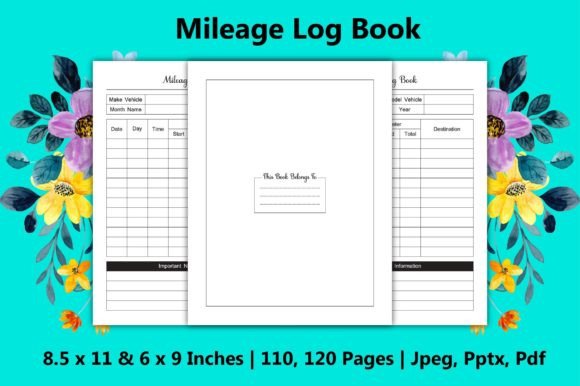
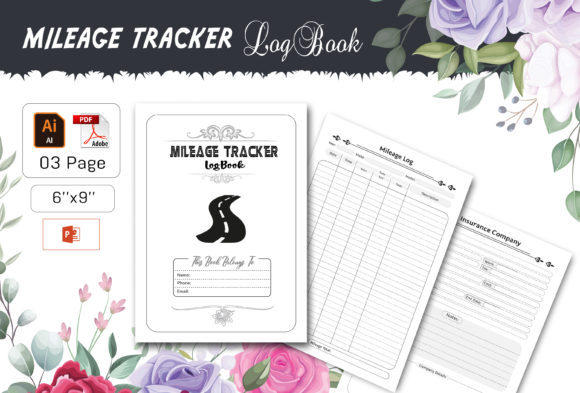
A mileage log book is a dedicated journal for recording every business-related vehicle trip. Each entry typically includes the date, destination, purpose of the trip, starting mileage, ending mileage, and total miles driven. While it sounds straightforward, its implications are profound.
For the self-employed, independent contractors, small business owners, and even employees who use their personal vehicles for work, this log is the primary evidence required by tax authorities, like the IRS in the United States, to claim a vehicle expense deduction. Without a contemporaneous, detailed log, deductions can be denied, leading to a higher tax bill. The log transforms subjective estimates into objective, defensible data. Its purpose extends beyond taxes, however. It allows individuals to accurately calculate true operating costs, budget for vehicle maintenance, and analyze travel patterns for efficiency improvements.
Common Misunderstandings About Mileage Tracking
Many people assume that a rough estimate or occasional notes are sufficient. This is a risky misconception. Tax guidelines generally require a "contemporaneous" log—meaning records made at the time of the travel, not reconstructed weeks or months later. Another assumption is that only long trips matter. In reality, every business mile counts, from the quick drive to the post office to the client meeting across town. A professional log book provides the structure to capture all these details reliably, turning a chaotic pile of receipts into a organized financial record.
The Modern Mileage Log Book: Fit for Digital and Physical Use
While apps and digital trackers exist, a physical log book remains incredibly relevant. It offers simplicity, reliability (no battery or signal required), and a tangible record that can be easily stored with other tax documents. For many, the act of writing reinforces accountability. The beauty of the modern approach is that this physical tool can be created and distributed digitally. This is where the concept of a KDP interior file comes into play.
Amazon’s KDP platform allows creators to publish paperback books. Instead of writing a novel, one can design and sell practical "interiors"—the ready-to-print inside pages of a book—such as planners, journals, and log books. A customer purchases the interior file, prints it, and binds it themselves or uses a print service. This model supports the growing "print-on-demand" and "DIY office supply" trends, fitting seamlessly into modern remote work, home offices, and small business operations.
Breaking Down the Features of a Professional KDP Mileage Log Interior
A truly useful mileage log book KDP interior isn't just a few blank tables. It is a thoughtfully designed, fully tested product that considers the end-user's needs. Let's explore the significance of the features commonly offered.
Design and Format Specifications
The standard 6 x 9 inches size is popular for KDP because it is portable, professional, and cost-effective to print. Print-ready files with 300 dpi resolution ensure sharp, clear text and graphics when printed at home, in an office, or at a professional print shop. The mention of No Bleed is crucial: a "bleed" is a printing term for graphics that extend to the edge of the page, requiring special trimming. A "no bleed" design means the content is safely within margins, making it foolproof for standard printers and binding, which is ideal for beginners.
Flexibility and Customization for the User
Perhaps the most powerful features are those that offer flexibility. An easy-to-editable file and a fully editable vector design (often in an Illustrator .AI file) mean that a purchaser who has design skills can modify the log book before printing. They can change fonts, adjust layouts, or even change colors to match their brand if the log is for a business. The inclusion of 100 vector shapes re-sizable provides graphic elements (like icons for different trip purposes) that can be tailored without losing quality. This caters to both the novice who just wants to print the ready-made PDF and the experienced user who wants a custom tool.
File Format Suite for Universal Access
A comprehensive interior provides files for different software and purposes. The ready-to-upload PDF is the final product for immediate printing or uploading to KDP. The illustrator CC 2019 Ai file is for advanced graphic editing. The Microsoft PowerPoint 2016 PPT file is a brilliant inclusion; PowerPoint is widely available, user-friendly, and allows for easy editing of tables and text for those without professional design software. JPEG Image Includes offer quick visuals or potential for use in digital presentations. This multi-format approach ensures the product is helpful to a wide audience, regardless of their technical toolkit.
The Practical Relevance: From Tax Seasons to Daily Operations
Imagine a real estate agent driving to properties, a therapist visiting clients at home, or a craft vendor traveling to markets. Their vehicle is their office. A mileage log book, created from a quality KDP interior, becomes part of their daily routine. Each day's entries provide clarity. At month's end, they can total miles, calculate deductions (using the standard mileage rate set by tax authorities), and assess fuel costs. By year's end, they have a complete, organized document ready for their accountant or tax software.
For a freelance graphic designer, tracking miles to meet clients, purchase supplies, or attend networking events can uncover deductible expenses they might otherwise forget. The log book also serves as a business diary, indirectly helping to justify travel as a legitimate business expense by recording the purpose each time.
An Example of Natural Integration
Consider "Sarah," who runs a small pet grooming business. She uses her SUV to transport equipment to clients' homes. She purchases a KDP mileage log book interior, prints the 03-page PDF at her local print shop, and binds it with a simple cover. Now, before she leaves each morning, she jots down the date, client address, and starting odometer reading. After the appointment, she records the ending mileage. The "purpose" column is always "Mobile Grooming Service." Over six months, this log not only prepares her for tax season but also shows her that a certain neighborhood generates the most travel cost, prompting her to consider a slight price adjustment for that area. The log book has evolved from a tax tool to a business analytics tool.
Building a Broader Understanding: The Log Book as Part of a System
A mileage log book shouldn't be isolated. It fits into a broader system of business documentation. It complements expense receipts (for fuel, maintenance, parking), vehicle insurance records, and income logs. This holistic record-keeping builds financial credibility and resilience. For the KDP creator selling these interiors, understanding this context allows them to design better products—perhaps by including notes pages for related expenses or a yearly summary page.
Furthermore, the ability for users to build their own Mileage Log Book from an interior file speaks to empowerment. It moves beyond purchasing a static, mass-produced item from a store. Users become active participants in creating a tool tailored to their specific needs, whether it's for a sole proprietorship, a rental property management side business, or even tracking volunteer miles for a nonprofit. This aligns perfectly with trends in entrepreneurship, customization, and practical self-sufficiency.
Conclusion: A Simple Tool with Significant Impact
The mileage log book is a classic example of a simple solution to a complex problem—the problem of unverified expenses and lost deductions. In today's digital marketplace, the availability of professionally designed, tested, and flexible KDP interiors democratizes access to this tool. Whether you are a user seeking a reliable way to track your miles and safeguard your deductions, or a KDP publisher looking to create a helpful, marketable product, the mileage log book interior stands out. It blends traditional record-keeping wisdom with modern digital distribution and customization. By understanding its features, from the print-ready PDF to the editable vector files, and its role in modern business and personal finance, one can truly appreciate its value as more than just pages in a book—it's a foundation for financial order and savvy.