Your Essential Guide to Mileage Log Books for Amazon KDP Publishing
In the bustling world of self-publishing, especially on platforms like Amazon Kindle Direct Publishing (KDP), finding profitable niches often means looking beyond traditional novels and textbooks. One such lucrative area is the creation of low and no-content books. Among these, a mileage log book stands out as a practical, evergreen product with a consistent demand. Whether you are a seasoned KDP publisher exploring new formats or a beginner looking for a straightforward entry point, understanding how to create, customize, and offer a mileage log book can be a significant step toward building a sustainable publishing business.
What Exactly is a Mileage Log Book?
A mileage log book is a specialized journal designed for systematically recording vehicle travel details. Its primary purpose is to document miles driven, often for essential reasons such as tax deductions, business expense tracking, reimbursement claims, or personal budgeting. For individuals who use their vehicles for business, freelance work, or even significant medical travel, maintaining an accurate log is not just helpful—it's frequently a legal or financial necessity. In a physical format, this book provides a structured, reliable, and portable solution, far superior to scattered notes or forgotten digital entries.
The core function of such a log is to capture data like the date of travel, starting and ending locations, the purpose of the trip, the beginning and ending mileage, and the total miles driven for each journey. Over time, these entries compile into a clear, auditable record that can substantiate claims and provide valuable insights into travel patterns and costs.
The Significance of Mileage Log Books in Modern Life and Business
In our mobile society, where gig economy work, small businesses, and remote service jobs are prevalent, tracking mileage has become more common than ever. The Internal Revenue Service (IRS) and similar bodies in other countries allow deductions for business-related vehicle use, but they require contemporaneous records—meaning notes taken at the time of the travel, not reconstructed later. A dedicated log book is the perfect tool to meet this requirement.
Beyond taxes, companies often require employees or contractors to log miles for reimbursement. Freelancers, real estate agents, therapists making house calls, and delivery drivers all benefit from organized tracking. Even from a personal perspective, a log can help monitor vehicle wear, plan for maintenance, or track costs for a long-term road trip. The practical relevance spans professional, financial, and personal organization, making it a tool with a broad and enduring audience.
How a KDP Mileage Log Book Fits into Your Publishing Business
For Amazon KDP publishers, this enduring demand translates into a steady market opportunity. Low-content books, like journals, planners, and log books, are popular because they are relatively simple to produce, have low per-unit costs, and cater to specific, functional needs. A mileage log book is a prime example of a useful, no-content interior that customers purchase for its structure, not its written text.
The business model is attractive: you design the interior pages—the tables, headers, and layout—and publish it as a physical paperback on Amazon. When a customer needs a log, they search, find your book, and purchase it. You, as the publisher, earn royalties on each sale. The key is offering a well-designed, professional product that meets the user's needs exactly, which is where ready-to-use interiors become invaluable.
Exploring "Mileage Log Book - KDP Interiors" and Instant Downloads
Many publishers, especially those new to design, opt to start with professionally created templates. A product titled "Mileage Log Book - KDP Interiors" typically refers to a complete, ready-to-upload package designed specifically for the KDP platform. These packages are crafted to comply with Amazon's technical specifications, saving you hours of design work and technical troubleshooting.
When you download such a product "instantly with PDF ready to upload on KDP," you are receiving a turnkey solution. Let's break down what such an offering usually includes, as highlighted in typical descriptions:
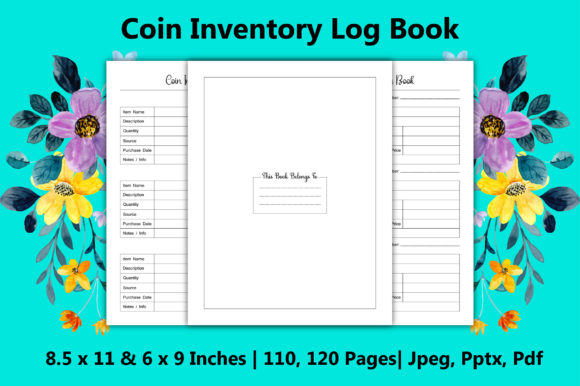
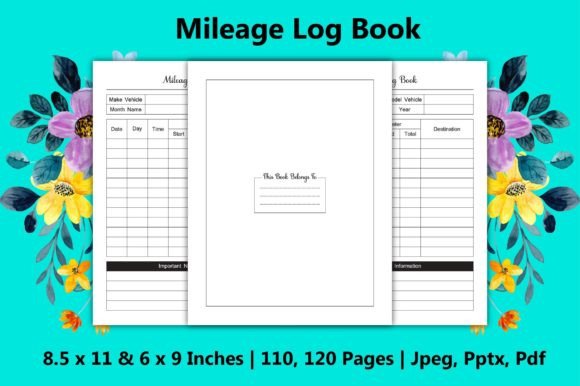
- Dimensions: Two standard paperback sizes: 8.5 x 11 inches (Letter size) and 6 x 9 inches. These are KDP-approved dimensions that cater to different preferences; some users prefer a larger log for more writing space, others a more portable size.
- Page Count: Options like 110 and 120 pages. This provides ample space for a full year of logging or even more, adding value for the customer.
- Bleed Settings: No Bleed. This is a crucial technical setting for KDP paperbacks. "No Bleed" means the design does not extend to the edge of the page, which is the required standard for books without full-color edge-to-edge printing.
- Interior Color: Black and White. This keeps printing costs low for Amazon and makes the final book affordable for you to sell and for the customer to buy.
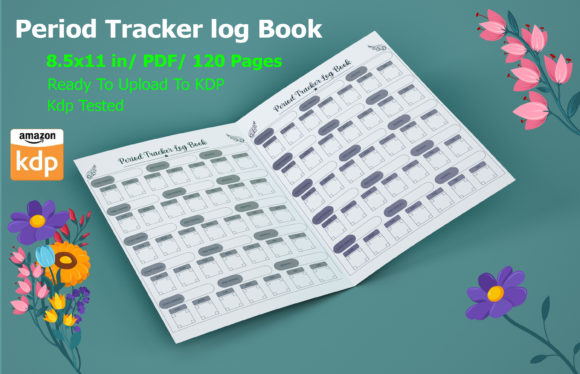
- File Formats: JPEG pages, PDF, and PPTX files. This combination is powerful. The PDF is the ready-to-upload file for KDP. The JPEGs allow for visual verification of each page. The PPTX (PowerPoint) file enables easy customization—you can change headings, add a logo, or modify layouts without needing advanced graphic software.
- Notes: Tested with Amazon KDP. This is a vital assurance. It means the files have been uploaded and validated within the KDP system, ensuring they meet all quality checks and will not be rejected for formatting issues.
The Practical Relevance of Customization Files
The inclusion of PPTX files for customization is a significant advantage. Even with a ready-made interior, you might want to brand your book or make slight adjustments to better target a specific niche—for example, "Mileage Log for Real Estate Agents" or "Freelancer's Travel Log." Using the PowerPoint file, you can alter titles, page headers, or introductory text without altering the core table structure. This flexibility allows you to stand out in the marketplace while still leveraging a proven, functional design.
Clarifying Common Misunderstandings About Low-Content KDP Publishing
A common assumption is that low-content books are "easy money" with no effort. While simpler than writing a novel, successful publishing still requires strategy. You must:
- Understand Your Audience: Who needs this log? Small business owners, independent contractors, or perhaps rideshare drivers?
- Optimize Your Listing: Craft a clear title, keyword-rich description, and choose relevant categories. For a mileage log, terms like "business travel log," "tax deduction mileage tracker," and "vehicle expense journal" are natural semantic keywords.
- Ensure Quality: Even with a template, preview your book thoroughly using KDP's online previewer. Check that all pages are clear, numbering is correct, and the cover aligns perfectly with the interior.
Another misunderstanding is that one size fits all. Offering both 8.5x11 and 6x9 versions, as many interior packages do, allows you to cater to different customer preferences and create two distinct products for your catalog, potentially doubling your reach in this niche.
Building a Broader Understanding: From Product to Business
Starting with a single mileage log book interior can be the first step in building a broader low-content business on KDP. The skills you learn—uploading files, checking specifications, crafting listings—apply to all other low-content books: workout logs, meal planners, budgeting journals, and more. Each functional book serves a specific segment of the market, and together, they can create a diversified stream of passive income.
Moreover, understanding the why behind the product—the tax, business, and personal organization needs it fulfills—helps you market it more effectively. Your book description can educate the customer on its importance, positioning your log not just as a notebook, but as a necessary financial tool. This approach aligns perfectly with E-E-A-T (Experience, Expertise, Authoritativeness, Trustworthiness) and Helpful Content principles. You demonstrate expertise by providing a product that precisely meets a well-defined need, building trust with your audience.
Integrating Technology with Tradition
While digital apps exist for mileage tracking, the physical log book remains popular for reasons technology doesn't address. It requires no battery, has no subscription fee, is not vulnerable to data loss from a crashed app, and provides a tangible record that can be easily stored with other paper documents. For many, the act of writing also creates a more deliberate and reliable record. Your KDP paperback elegantly bridges the gap between traditional record-keeping and modern, on-demand publishing technology.
Final Thoughts: Your Path to Publishing
A mileage log book is more than just columns and rows on a page; it is a solution to a real-world problem. By utilizing a professionally designed, KDP-tested interior package, you can quickly bring this solution to market. The provided dimensions, page counts, file formats, and customization options give you the foundation and flexibility needed to create a competitive product. Remember, your success lies in viewing this not just as a book, but as a useful tool for your customers. Start with this clear, functional product, learn the KDP ecosystem, and you may find yourself on a rewarding path in the world of self-publishing, meeting the practical needs of readers one helpful log book at a time.