A Practical Guide to Evaluating Knitting Journal Templates for KDP
If you're exploring the world of self-publishing, particularly on Amazon's Kindle Direct Publishing (KDP) platform, you've likely encountered the concept of "low content" or "no content" books. Journals, planners, and logbooks are popular categories here, offering a streamlined path to publication. Among these, My Knitting Journal - KDP Interiors represents a specialized template designed for a specific creative audience. Understanding what this product offers, and how it compares to the broader spectrum of available resources, is crucial for making an informed decision about your publishing project.
What Is My Knitting Journal - KDP Interiors?
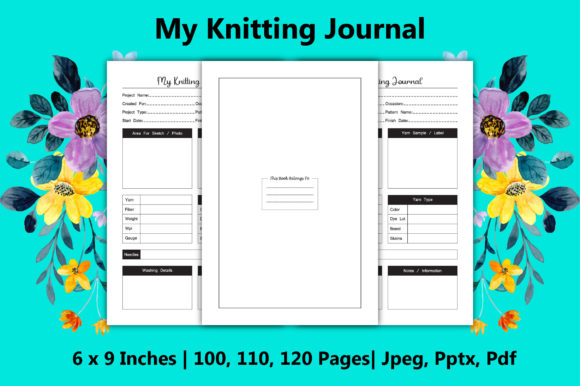
At its core, My Knitting Journal - KDP Interiors is a pre-formatted digital template package. It is designed for publishers who wish to create a physical notebook tailored for knitters. The product is not a completed book ready for sale, but rather the interior file—the pages themselves—that you upload to KDP to create your own version. The key specifications are a 6 x 9 inch trim size, options for 100, 110, or 120 pages, and black-and-white interior pages with no bleed. The download typically includes the pages in multiple file formats like JPEG, PDF, and PPTX, which allows for varying levels of customization before publishing.
This approach is distinct from creating a journal entirely from scratch or using generic journal templates. It provides a structured foundation specifically for documenting knitting projects, which might include sections for yarn details, needle sizes, pattern notes, progress tracking, and finished project reflections. The value lies in its niche focus; it saves time for the publisher by providing a layout that is immediately relevant to knitters, a demographic known for being detail-oriented and project-focused.
Key Considerations When Evaluating Template Products
Choosing a template like My Knitting Journal - KDP Interiors involves weighing several factors against your own goals, skills, and market understanding. It's not merely about buying a product; it's about selecting a tool that fits your publishing strategy.
Trade-offs Between Customization and Convenience
The inclusion of PPTX (PowerPoint) files alongside PDFs and JPEGs suggests a balance is offered. PDF and JPEG files are typically ready-to-upload, representing the "no content" path with minimal effort. The PPTX format, however, allows for modifications. This is a significant point of comparison with other offerings. Some template providers only supply flat image files, locking you into their exact design. Others might provide fully editable source files in more advanced software like Adobe InDesign, which offers greater control but requires specialized skills.
My Knitting Journal - KDP Interiors sits in a middle ground. The PowerPoint format enables basic changes—perhaps altering a title, adding a simple graphic, or rearranging page order—without requiring professional design software. This is practical for individuals with moderate computer proficiency. However, the trade-off is that deep, structural design changes might be more cumbersome in PPTX compared to a dedicated layout program. If your vision requires heavy customization, this template might serve as a starting point but not a final solution.
Niche Focus vs. General Appeal
The explicit knitting theme is its greatest strength and its primary limitation. For a publisher aiming to serve the knitting community, this specificity is invaluable. It communicates immediate relevance to the target customer, potentially increasing conversion rates compared to a generic blank journal. The interior layout likely uses terminology and section headings knitters expect, which can enhance the user experience.
When compared to broader alternatives, such a themed journal naturally has a narrower market. A general "craft journal" or "project planner" might attract knitters, crocheters, embroiderers, and other makers. The decision here hinges on your marketing focus. Are you building a brand around knitting, or do you prefer a more versatile product that can be marketed to several adjacent hobbies? My Knitting Journal - KDP Interiors is clearly the right choice for a dedicated knitting niche approach.
Analyzing Format and Technical Specifications
The technical details provided are critical for KDP compatibility and production quality. The 6 x 9 inch size is a standard, popular format for journals, offering a good balance between portability and writing space. The page count options (100, 110, 120) provide flexibility for creating different value tiers—a shorter, more affordable journal versus a longer, more comprehensive one.
The "No Bleed" and "Black and White" settings are important cost and complexity considerations. Books with a "bleed" require images to extend to the edge of the page, which demands more precise file preparation and often involves color. A no-bleed, black-and-white interior is fundamentally simpler to produce, with lower printing costs on KDP and a lower risk of technical upload errors. This makes products like My Knitting Journal - KDP Interiors a pragmatic entry point for new publishers. However, it also means the aesthetic is constrained. If you are comparing options and envision a journal with colorful, full-page decorative elements, this template would not fit that requirement.
File Formats and Their Practical Implications
The multi-format delivery is a notable feature. Here’s a practical comparison of how each might be used:
- JPEG Pages: These are likely individual image files of each page. They are the simplest to upload directly to KDP if you want zero editing. This is the fastest path to publication.
- PDF: A consolidated file ready for upload. It’s also easily printable for personal proofing. This is often the most reliable format for the KDP upload system.
- PPTX: The customization gateway. You could change font colors, add a logo on the cover page, or insert additional instructional text. It requires more work but enables a unique product.
Having all three allows you to choose your own workflow based on confidence and time.
When Is This Template the Right Choice?
Identifying the best-fit situation for My Knitting Journal - KDP Interiors can help you decide if it aligns with your project.
- You are new to KDP and want a tested, niche product: The mention that it's "Tested With Amazon KDP" indicates the files meet platform specifications, reducing technical anxiety for beginners.
- Your target audience is clearly knitters: If your research, marketing channels, and personal interest are centered on knitting, this template's built-in structure provides authentic value.
- You prefer a moderate level of customization: You want to put your name on the product but lack advanced graphic design skills or software. The PPTX files offer a manageable way to personalize.
- You prioritize cost-effective, black-and-white interiors: Keeping printing costs low is a key business strategy, especially when testing a new niche.
When Might You Need an Alternative Option?
A balanced evaluation also requires recognizing when this specific product might not meet your needs. Practical comparisons to other paths are useful.
- If you require full-color, artistic interiors: The black-and-white constraint is a deliberate limitation. For a visually lush, inspirational journal, you would need to seek out templates designed with color and bleed from the start.
- If you need a highly unique or complex layout: While PPTX allows edits, major architectural changes to the page design—like adding complex tables, integrated calendars, or unique tracking systems—might be easier to achieve with a custom design or a more flexible template suite.
- If your market is broader than knitting: As noted, the niche is specific. For a general "maker's journal," you might adapt this, but it could require significant modification of the terminology and section headers throughout.
- If you possess advanced design skills: If you are proficient in professional layout software, starting from a more basic or raw template—or even from scratch—could give you greater creative control and differentiation in the marketplace.
The Decision Factor of "Low Content" Philosophy
Ultimately, products like My Knitting Journal - KDP Interiors exist within the "low content" publishing model. This model trades deep, original content creation for efficiency and scalability. The trade-off is that market competition can be high, as many publishers use similar templates. Your success then depends more on effective marketing, branding, and niche selection than on the uniqueness of the interior pages. This template is a tool for that model. If your goal is to publish a series of journals quickly across various hobbies, such templates are efficient. If your goal is to create a single, standout, author-driven knitting companion with extensive original text and illustrations, this would only be a very basic starting component.
By understanding the distinct offerings of My Knitting Journal - KDP Interiors—its niche design, its balanced customization options, and its technical specifications—you can better assess its place in your publishing plans. Comparing it against the wider landscape of templates, custom design, and different format strategies allows for a more informed decision, ensuring the resource you choose truly fits the book you intend to create and the audience you hope to serve.